Coordinated Action Networks

Infrastructure for Aligning Local Decisions with Global Consequences

THE PROBLEM

Human decisions determine how resources, energy, and power are used across a shared global system.

These decisions are made locally—
by individuals, communities, companies, and governments—
based on immediate conditions and incentives.

But their consequences are global.


This creates a structural failure:

  • Climate outcomes are driven by uncoordinated development decisions
  • Supply chains destabilize from independent actions
  • Economic and political systems react after disruption
  • Public trust erodes when participation does not lead to outcomes

Global outcomes are now driven by uncoordinated local decisions.

No system exists to align those decisions
with their full economic, environmental, and social consequences.
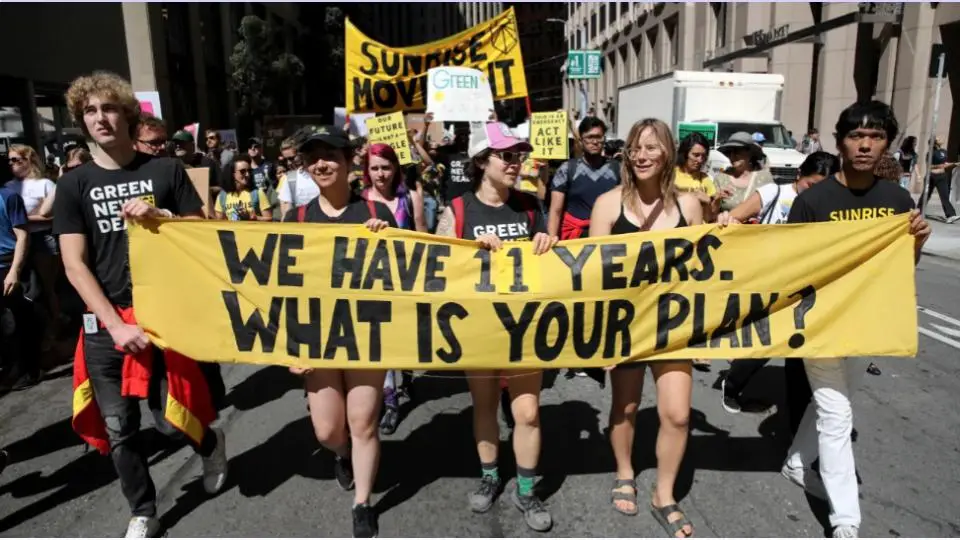
THE OPPORTUNITY

We are not constrained by technology.

The world already has:

  • global connectivity (5+ billion smartphones)
  • cloud-based infrastructure
  • artificial intelligence capable of structuring large-scale communication

What is missing is coordination infrastructure.

A system that enables:

  • local autonomy
  • shared visibility
  • aligned action

at the scale of consequence.

THE SOLUTION

Coordinated Action Networks (CAN)

A distributed platform that enables communities to:

  • define and measure informed consensus
  • translate agreement into coordinated action
  • connect decisions across regions and cultures

Core function:

Enable communities to act locally
while aligning with shared global realities.

HOW IT WORKS

1. Community Formation
Residents join a verified, geographically anchored network.

2. Issue Identification
Members introduce concerns, proposals, and observations.

3. AI-Assisted Structuring
Natural language processing identifies:

  • areas of agreement
  • divergence
  • uncertainty

4. Consensus Measurement
Secure polling establishes statistically meaningful agreement.

5. Action Triggering
When thresholds are reached:

  • results are communicated to media and institutions
  • economic and policy responses can be initiated
  • adjacent communities are informed

6. Cross-Community Alignment
Similar issues are linked across regions, enabling coordination at scale.

USE CASE

Urban Flood Response

Without coordination:

  • fragmented reporting
  • delayed response
  • inefficient allocation of resources

With Coordinated Action Networks:

  • real-time local input
  • rapid identification of priorities
  • verified consensus within hours
  • coordinated response across agencies and communities

Outcome:

  • faster response
  • reduced harm
  • more efficient use of resources

IMPACT

Urban Flood Response

Without coordination:

  • fragmented reporting
  • delayed response
  • inefficient allocation of resources

With Coordinated Action Networks:

  • real-time local input
  • rapid identification of priorities
  • verified consensus within hours
  • coordinated response across agencies and communities

Outcome:

  • faster response
  • reduced harm
  • more efficient use of resources

Existing Systems

Social Media

Civic Platforms

Governments

Markets

Limitation

amplifies attention, not agreement

gather input, do not coordinate outcomes

act after consequences emerge

respond to signals, not consensus

Coordinated Action Networks:

  • structure communication
  • measure real agreement
  • enable coordinated action
  • connect decisions across communities


Social media connects people.
Coordinated Action Networks align decisions.

TECHNOLOGY

Built on existing, scalable systems:

  • cloud infrastructure
  • AI / NLP for semantic analysis and moderation
  • encrypted, distributed data architecture
  • blockchain-supported verification (optional layer)

Design principles:


  • privacy-first (no data monetization)
  • decentralized community ownership
  • interoperability across regions
  • low-cost deployment (< $1 per user annually at scale) 

DEPLOYMENT STRATEGY

Phase 1 — Pilot Communities

  • targeted urban and regional deployments
  • focus on high-impact use cases (housing, climate, emergency response)

Phase 2 — Regional Networks

  • connect adjacent communities
  • enable shared visibility of issues

Phase 3 — Global Coordination Layer

  • align patterns across regions
  • support coordinated response to global challenges

WHY NOW?

  • global systems are increasingly interconnected
  • local decisions produce global consequences
  • existing institutions cannot coordinate at required scale
  • AI now enables structured understanding of large populations

The constraint is no longer capability.
It is coordination.

THE ASK

  • We are seeking:

    • pilot communities for deployment
    • partnerships with media, NGOs, and institutions
    • strategic funding to accelerate implementation

CLOSING

Coordinated Action Networks provide the missing infrastructure
for aligning human decisions with their consequences.