Powerful technologies and development projects are funded and implemented by economic systems that are optimized for extraction, competition, speed, first-to-market advantage, ownership, and institutional prestige.
The problem is that people and ecosystems most affected are brought in or intervene with protests—after decisions have been framed by investors, developers, governments, and technical experts.
Historically this has been seen in damming rivers for hydroelectric power, where benefits such as electricity, irrigation, and flood control were counted first, while displaced communities, damaged fisheries, altered river systems, and downstream ecological losses were ignored.
The pattern is now visible in AI data centers development, solar geoengineering proposals, and local development pressure in conservation areas. The proposed Stratos AI data center in Utah would cover more than 40,000 acres and require about 9 gigawatts of power. Local opposition cites concerns for water, energy, heat, and other ecological impacts. Data-center electricity demand is projected to double by 2030, with AI-focused data-center demand tripling.
Stardust Corporation’s geoengineering proposal would scatter millions of tons of silicon into the atmosphere to reflect sunlight.
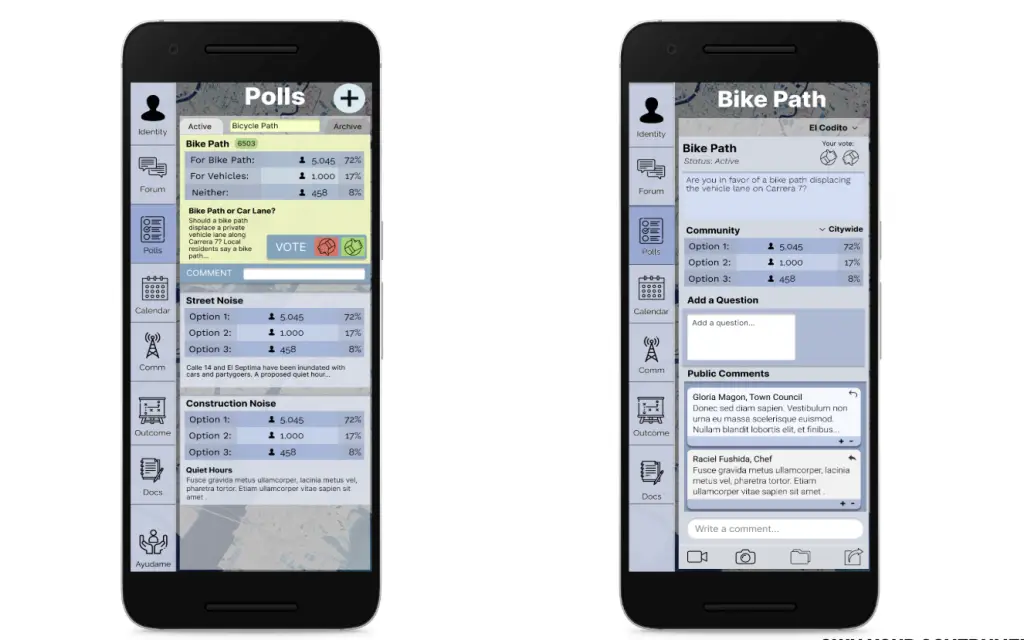
There is presently neither community nor planetary consent process. CAN is designed to provide such a process.
CAN is a database-centered technology that can be localized for any community anywhere. Each community acts independently locally, while compatible records technology causes alignment between communities to emerge globally, without central control.